The Muscle Research Group
Institute of Ageing & Chronic Diseases
University of Liverpool




When a skeletal muscle of an adult mammal is subjected to a substantial and sustained increase in use, it undergoes a series of profound changes that enable it to cope with the new demands. This adaptive behaviour is demonstrated to most striking effect in the response of muscle to long-term electrical stimulation. The discovery prompted related investigations into the physiological, histochemical and biochemical correlates of adaptive change in skeletal muscle, including the signalling events that underlie changes in the regulation and coordination of the corresponding genes.
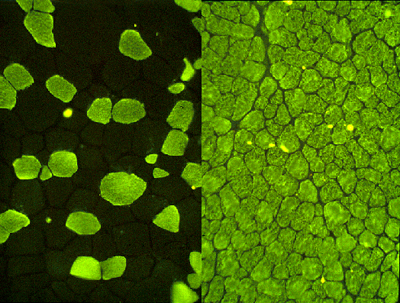
The left panel shows a control muscle, stained with a fluorescent labelled antibody to slow myosin. The right panel shows the effect of 6 weeks of electrical stimulation.
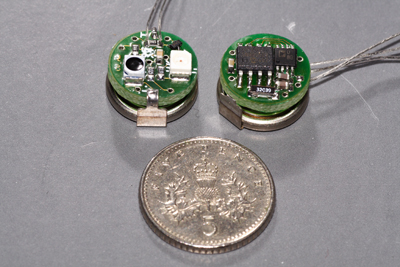
The Group's implantable electronic stimulators have been central to this work. The first such stimulator was designed by Stanley Salmons in 1966, while he was pursuing his PhD research on something very different! Given the scope to pursue its application by his supervisor, Eric Ashton, he went on to propose the idea of functional adaptation in his thesis and to argue the case for it in meetings and publications (see, for example, Full Papers #8, 11, 12). Within a few years this new paradigm had displaced the widely held notion of chemotrophic control of the properties of muscle. The latest generation of microprocessor-based devices allows the programme of stimulation to be varied after implantation.
A major part of the Group's work has been the application of this knowledge to new surgical techniques for the relief of heart failure. Grafts of 'conditioned' skeletal muscle were made fatigue-resistant by electrical stimulation and configured as wraps around the heart or as auxiliary pumps to assist the failing heart. We also contributed to the use of electrical stimulation in the functional restoration of muscles in patients who are both paralysed and denervated, and in the configuration of conditioned muscle as neosphincters in gastro-intestinal surgery.
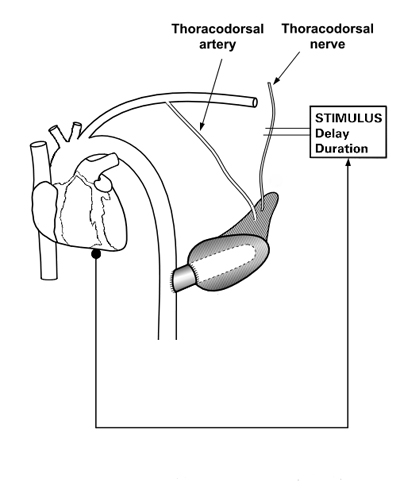
On the right is an experimental configuration for a skeletal muscle ventricle, an accessory heart made from a conditioned back muscle. It boosts systemic and coronary circulations, while reducing the work done by the cardiac left ventricle.
Liverpool John Moores University